

Every year, the lead‑up to Christmas creates a predictable but often underestimated cashflow challenge for Gold Coast businesses. Some industries experience their busiest period of the year, while others face a sharp pause in activity. Hospitality, tourism and ecommerce often see a surge in December, while builders, trades, agencies and professional services commonly experience a quiet January. Regardless of the industry, the pattern repeats annually, and the businesses that prepare early manage the Christmas slowdown with far less stress.
The Christmas slowdown is not just about reduced sales. It affects wages, tax cycles, supplier payments, stock commitments, and superannuation timing. For mid-sized businesses with three to ten million in turnover, these pressures can create a cash gap that lasts several weeks. The gap is predictable, but it is only manageable if you forecast it early and build a plan that supports your operations through December and January.
This article explains how to forecast the Christmas slowdown, prepare for the tax and super obligations that fall during this period, and why talking to your accountant early makes the summer months easier. It also outlines how this planning connects directly to your Virtual CFO and cashflow management processes.
Why the Christmas Slowdown Matters for Mid-Sized Businesses
The Christmas slowdown affects businesses differently by industry. For some, December is the busiest month of the year. For others, it is the last active month before a quiet January. The challenge isn’t the slowdown itself, but the mismatch between cash coming in and cash going out.
Many businesses see strong sales in December but don’t receive payment until January or February. Others have reduced sales in January but still need to pay wages, rent, suppliers and tax obligations. Even businesses that close for part of January still have fixed costs that continue regardless of activity.
The Christmas slowdown matters because it creates a cashflow gap. The gap is predictable, but it can be damaging if you do not plan for it. Businesses that prepare early can manage the gap smoothly. Businesses that wait until late December often find themselves reacting to pressure rather than managing it.
Understanding How the Slowdown Affects Your Cash Position
The Christmas slowdown affects cashflow in several ways. Sales may slow down, but expenses continue. Staff may take leave, but you still need to pay wages. Suppliers may close, but invoices still fall due. Tax and super obligations do not pause for the holiday period.
For businesses with project‑based work, such as builders, trades and agencies, the slowdown can be particularly sharp. Projects often pause in mid-December and do not resume until late January. This creates a period of reduced invoicing and delayed payments. For hospitality and ecommerce, the challenge is different. December may be busy, but January can be quiet, and December cash needs to last through the slower period.
To understand how the slowdown affects your cash position, you need a clear view of your cash inflows and outflows. This is where forecasting becomes essential.
How to Forecast the Christmas Cashflow Gap
Forecasting the Christmas slowdown is not complicated, but it does require accuracy. You need to understand when money will come in, when it will go out and how much cash you need to cover the gap.
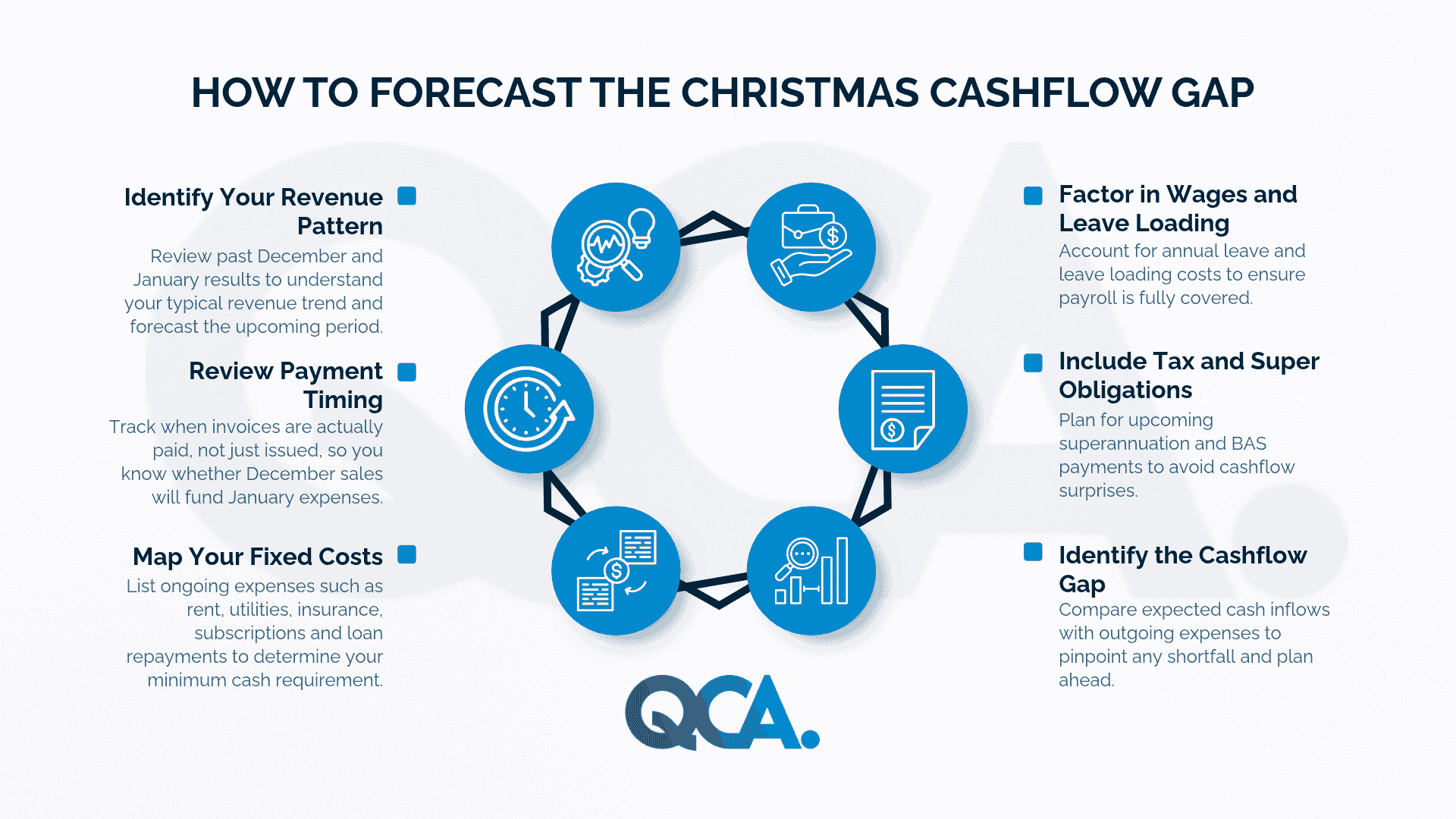
Identify Your December and January Revenue Pattern
Start by reviewing your revenue pattern from previous years. Most businesses have a consistent trend. December may be strong, moderate or quiet. January may be slow, paused or steady. Understanding this pattern helps you forecast your likely revenue for the upcoming period.
Review Your Payment Timing
Revenue is not the same as cash. Many businesses invoice in December but receive payment in January or February. Review your debtor days and identify when you realistically expect cash to arrive. This helps you understand whether your December sales will support your January expenses.
Map Out Your Fixed Costs
Fixed costs continue regardless of activity. Rent, utilities, insurance, subscriptions and loan repayments all fall due during the Christmas slowdown. Mapping these costs helps you understand your minimum cash requirement.
Include Wages and Leave Loading
Staff often take annual leave in December and January. Leave loading increases wage costs during this period. Accurate wage forecasting ensures you have enough cash to cover payroll.
Include Tax and Super Obligations
Tax and super obligations often fall during or immediately after the Christmas slowdown. December wages create a super payment due in late January. Quarterly BAS obligations may fall soon after. Including these obligations in your forecast helps you avoid unexpected pressure.
Identify the Gap
Once you have mapped your revenue, payment timing, fixed costs, wages and tax obligations, you can identify the cashflow gap. The gap is the difference between the cash you expect to receive and the cash you need to pay out. This gap is predictable, and planning for it early makes it manageable.
When to Put Money Aside for Tax and Super
Tax and super obligations are often the most overlooked part of the Christmas slowdown. Many businesses focus on operational costs but forget that tax and super fall due shortly after the holiday period.
Superannuation for December wages is due in late January. Quarterly BAS obligations may fall in February. These obligations can be significant and often arrive when revenue is lower.
Putting money aside early is essential. The best time to allocate funds for tax and super is during your stronger months. For many businesses, this means setting aside funds in October, November, and December. Allocating funds early ensures you have enough cash to cover your obligations during the slowdown.
Why Talking to Your Accountant Early Makes the Summer Easier
Your accountant can help you forecast the Christmas slowdown, identify the cashflow gap and build a plan to manage it. Talking to your accountant early ensures you have enough time to prepare.
Your accountant can help you review your revenue pattern, payment timing, fixed costs, wages and tax obligations. They can help you identify the gap and build a plan to cover it. They can also help you review your pricing, payment terms and debtor management to improve your cash position.
For businesses using Virtual CFO services, this planning is already part of your regular workflow. Your Virtual CFO monitors your cashflow, forecasts your obligations and helps you prepare for seasonal changes. The Christmas slowdown is one of the most predictable seasonal changes, and your Virtual CFO can help you manage it smoothly.
How Virtual CFO Support Strengthens Your Cashflow Planning
Virtual CFO support provides ongoing financial oversight. This includes cashflow forecasting, budgeting, scenario planning and financial reporting. Virtual CFO support helps you understand your cash position, identify risks and build strategies to manage them.
During the Christmas slowdown, Virtual CFO support is particularly valuable. Your Virtual CFO can help you forecast your revenue, payment timing, fixed costs, wages and tax obligations. They can help you identify the gap and build a plan to cover it. They can also help you review your pricing, payment terms and debtor management to improve your cash position.
Virtual CFO support strengthens your cashflow planning by providing accurate forecasting, proactive advice and ongoing monitoring. This helps you manage the Christmas slowdown smoothly and supports your long-term financial stability.
Practical Habits That Make the Christmas Slowdown Easier
Managing the Christmas slowdown requires strong habits. These habits help you prepare early, manage your cashflow, and reduce stress during the holiday period.
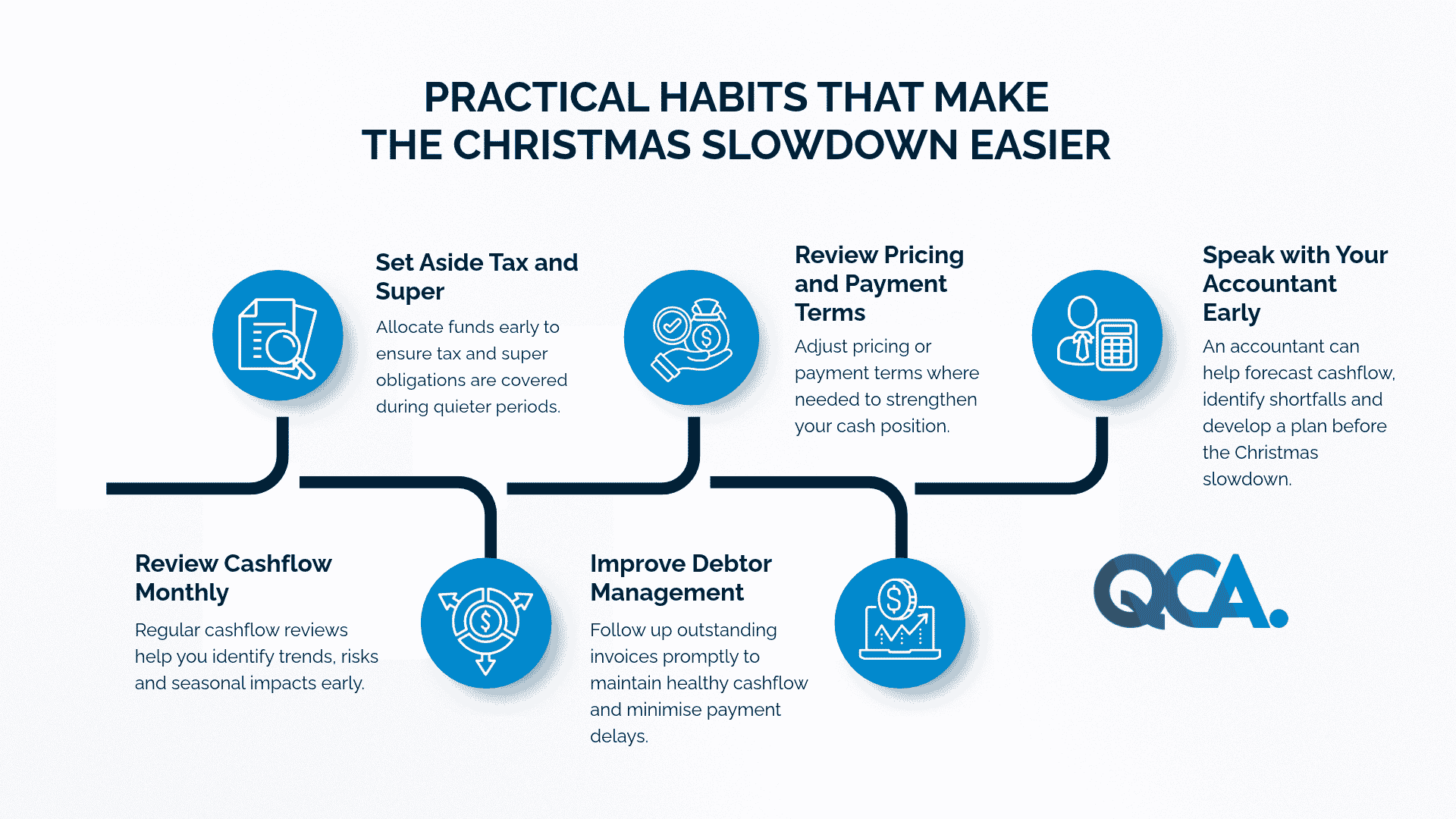
Review Your Cashflow Monthly
Reviewing your cashflow monthly helps you identify trends, risks and opportunities. It also helps you prepare for seasonal changes such as the Christmas slowdown.
Allocate Funds for Tax and Super Early
Allocating funds early ensures you have enough cash to cover your obligations during the slowdown. This reduces pressure and supports your financial stability.
Strengthen Your Debtor Management
Strong debtor management helps you receive payments on time. This improves your cash position and reduces the impact of delayed payments during the slowdown.
Review Your Pricing and Payment Terms
Review your pricing and payment terms to improve your cash position. This supports your financial stability during the slowdown.
Talk to Your Accountant Early
Talking to your accountant early gives you time to prepare. Your accountant can help you forecast the slowdown, identify the gap and build a plan to manage it.
Supporting Gold Coast Businesses Through the Christmas Slowdown
At QC Accountants, we help businesses prepare for the Christmas slowdown. We review your cashflow, forecast your obligations and help you build a plan to manage the gap. For businesses in the three to ten million turnover range, early preparation reduces risk and supports long-term stability.
If you want guidance on preparing for the Christmas slowdown or strengthening your cashflow planning, book a chat or call us on (07) 5593 6060.
This is general information only – not financial or legal advice. Financial conditions change, so check current requirements or speak to us before acting.