

For many property investors, the year ends quickly. Between managing tenants, handling maintenance, reviewing financing, and staying on top of tax obligations, it is easy to focus on immediate issues and postpone bigger strategic decisions.
The problem is that some of the most valuable planning opportunities occur before the calendar year ends. A structured review gives property investors a chance to identify potential risks, improve cashflow, prepare for tax time and ensure their investment structure still aligns with their long-term goals. It also lets you address issues before they become expensive problems.
An annual review does not need to be complicated. The most effective reviews focus on a handful of key areas that have a direct impact on performance, compliance and future growth. Loan structures, depreciation schedules, ownership arrangements, and record-keeping all deserve attention before the year ends.
Why an Annual Property Health Check Matters
Property investing is often viewed as a long-term strategy, which can sometimes create a false sense of stability. A property may appear to be performing well simply because you’re collecting rent and paying expenses. However, a property portfolio can become inefficient over time if you don’t review it regularly.
A lot can change over a few years. Changes in lending conditions, tax rules, and your own circumstances may mean a structure that once worked well no longer fits.
For established investors, particularly those holding multiple properties, regular reviews help ensure each asset continues contributing to broader financial objectives. Small, consistent improvements often produce better results than major corrections made years later.
An annual review gives you a chance to step back from day-to-day management and assess whether your portfolio is still working as intended.
Reviewing Your Loan Structure
Loan structures have a direct influence on cashflow, flexibility and long-term investment performance. Yet many property investors leave them untouched for years after finance is approved.
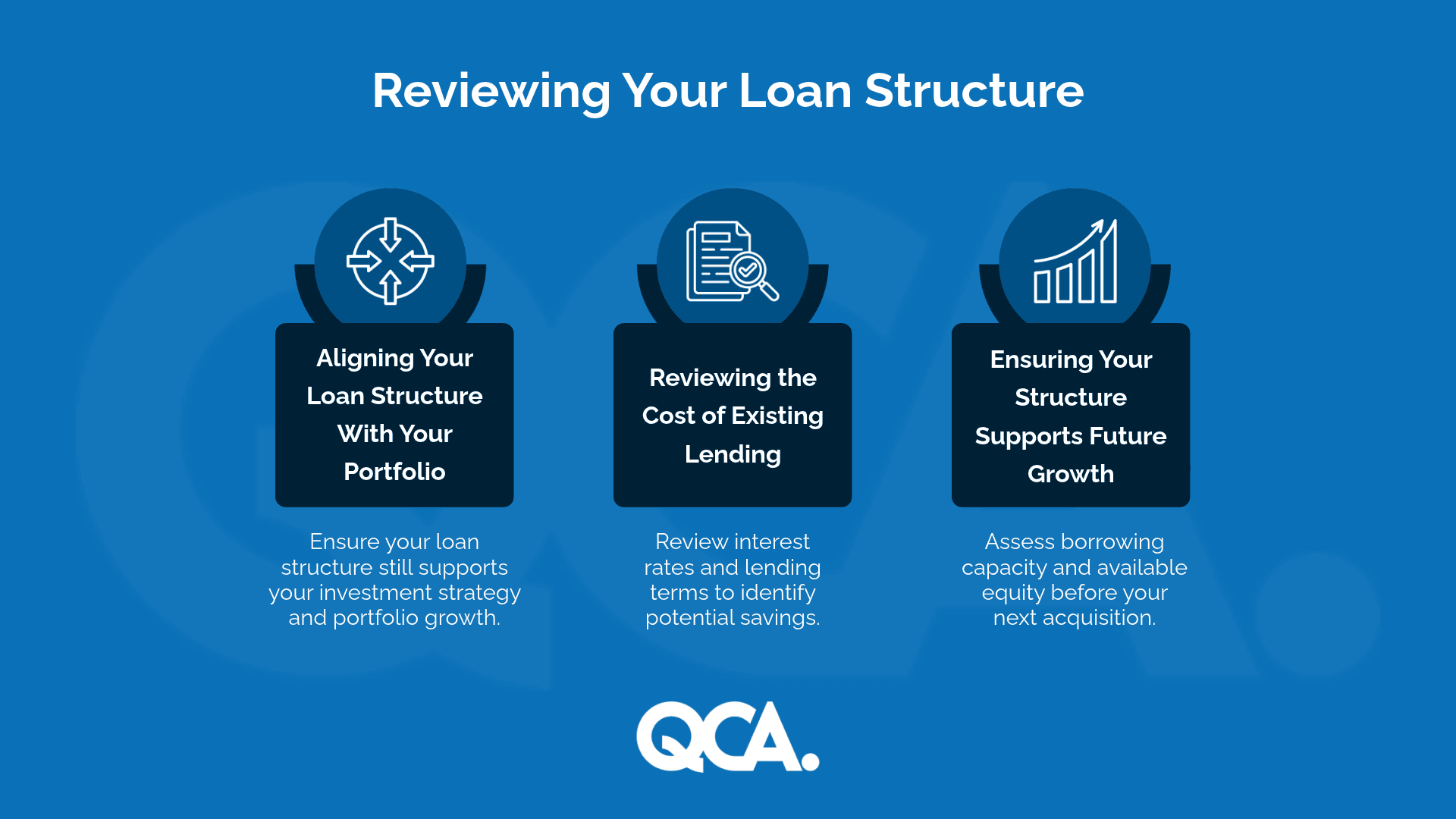
Aligning Your Loan Structure With Your Portfolio
As portfolios grow, financing arrangements often become more complex. What began as a straightforward investment loan may now sit within a portfolio that includes multiple properties, offset accounts, redraw facilities or different ownership entities.
Over time, changes to income, borrowing capacity and investment goals may mean the original loan structure no longer supports your broader strategy.
An annual review helps identify whether your current arrangement still supports your objectives. This may include reviewing fixed and variable lending components, assessing flexibility, and ensuring you’re fully utilising available features.
Reviewing the Cost of Existing Lending
Many investors focus on property performance without reviewing the underlying finance strategy. Interest remains one of the largest ongoing expenses within most investment portfolios.
Even small differences in interest rates can have a meaningful impact across several properties over a year.
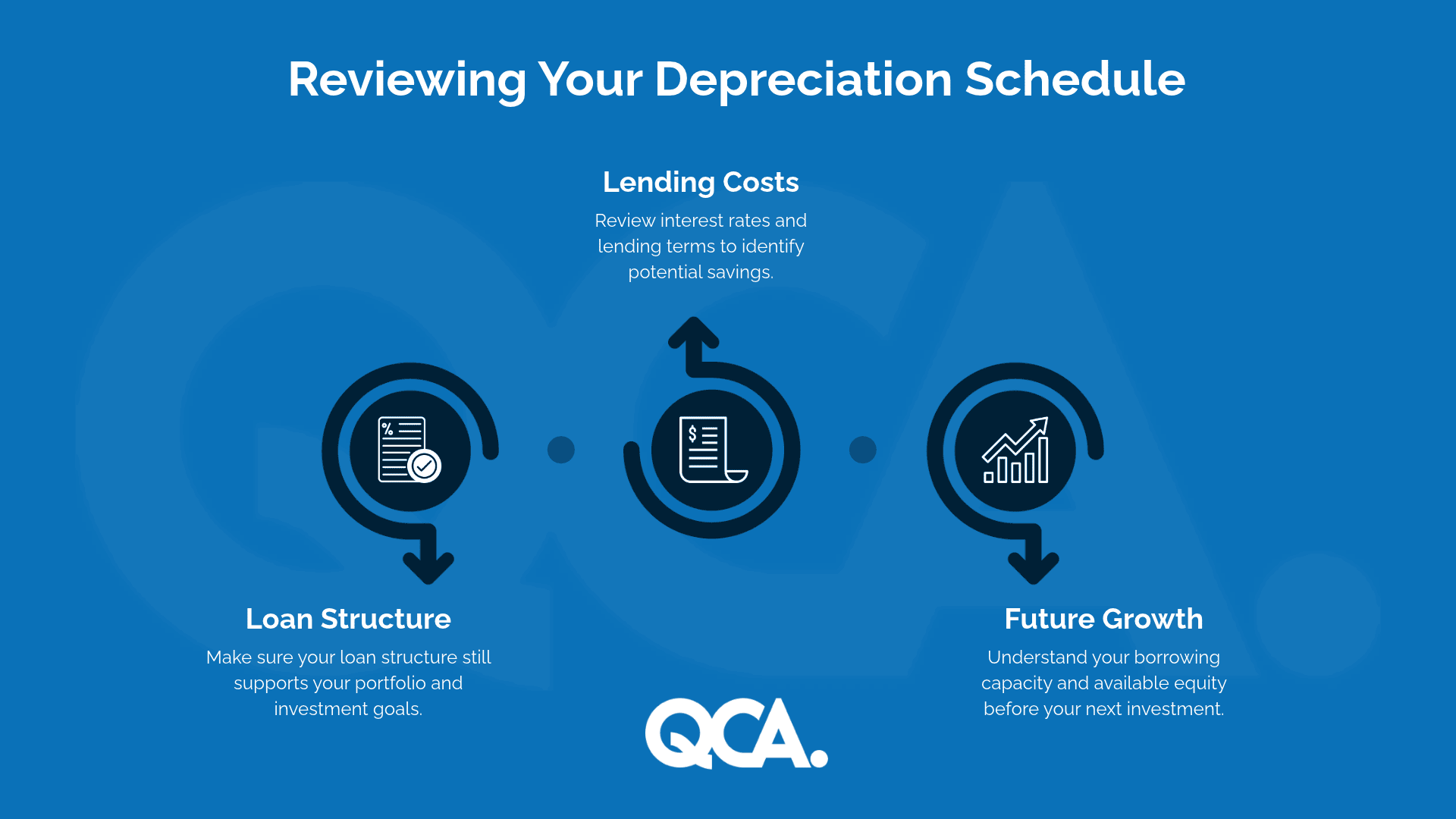
Reviewing loan arrangements before year-end gives you time to compare options, negotiate with lenders, and explore refinancing opportunities.
Ensuring Your Structure Supports Future Growth
A loan structure should not only support current properties. It should also support future opportunities.
Investors planning to acquire additional assets need to consider borrowing capacity, servicing ratios and available equity. Understanding these factors before year-end clarifies what may be possible over the next twelve months.
Reviewing Your Depreciation Schedule
Depreciation remains one of the most commonly overlooked areas of property investing. Many investors prepare a depreciation schedule when they first acquire a property but rarely review it again.
Keeping Your Depreciation Schedule Current
Property improvements, renovations and capital works can influence depreciation claims. If significant work has been completed since the original schedule was prepared, there may be deductions that are not currently being captured.
An annual review helps confirm whether your depreciation calculations should reflect changes to the property. Even relatively modest improvements may affect future deductions.
Making Full Use of Available Deductions
A depreciation schedule only creates value when it is actively used and reviewed. Investors occasionally miss deductions because they don’t update information or retain records related to improvements.
Reviewing your schedule before year-end provides time to identify opportunities, collect supporting documentation and ensure future claims are supported.
Providing Accurate Information for Tax Planning
The quality of tax advice depends on the quality of information available. Reviewing depreciation schedules before year-end ensures your accountant has accurate information when preparing future tax returns and forecasts.
It also gives you a clearer picture of after-tax property performance rather than relying solely on cashflow figures.
Reviewing Property Ownership Structures
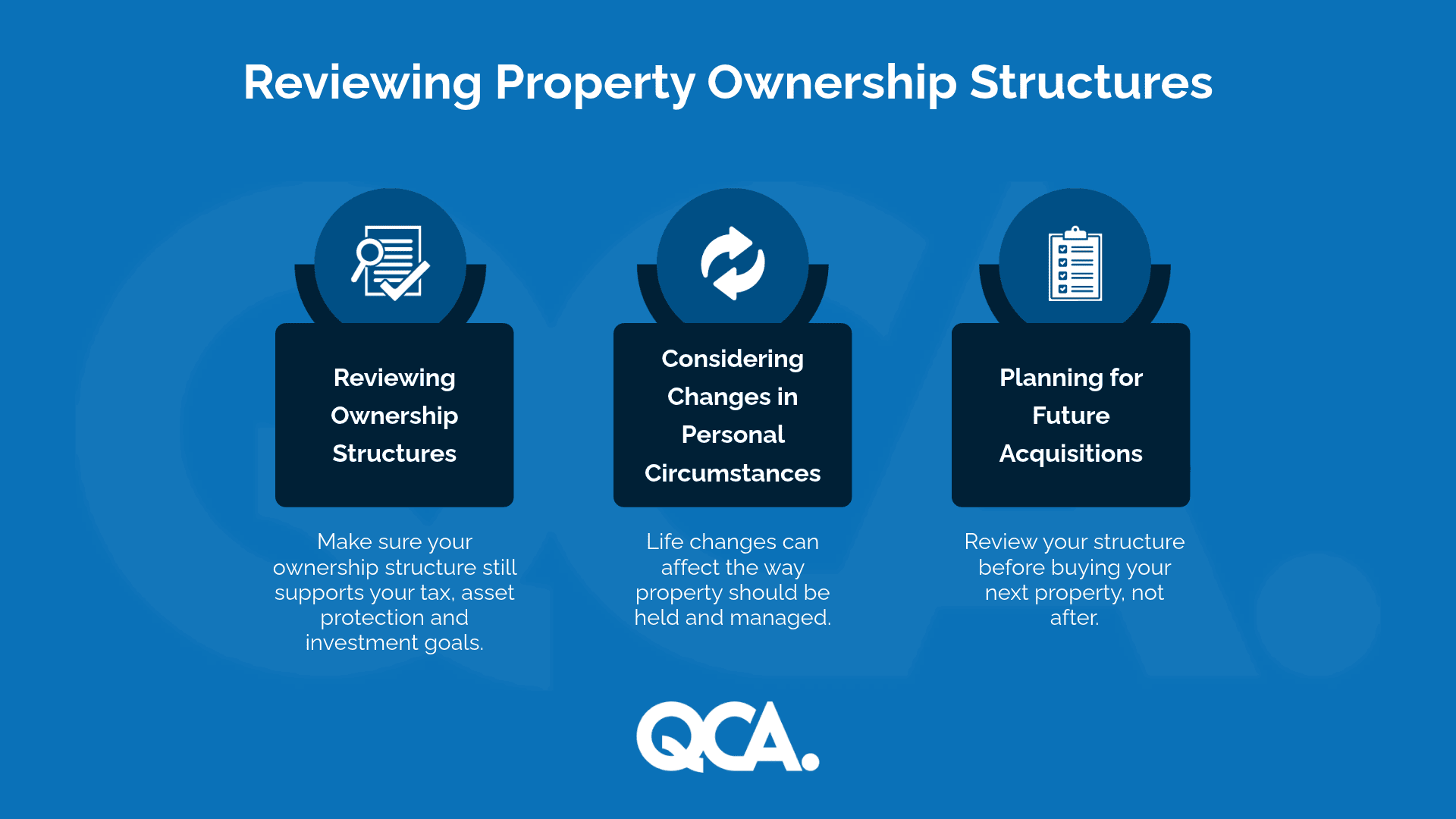
Owners often set up ownership structures when they buy a property and leave them unchanged for years. While changing ownership arrangements can have tax and legal implications, you shouldn’t ignore them.
An annual review helps determine whether the current arrangement still aligns with investment goals.
Reviewing Ownership Structures
Property investors commonly hold assets in personal names, trusts, companies or combinations of different entities. Each approach has advantages and disadvantages depending on individual circumstances.
Factors such as asset protection, income levels, succession planning and future investment intentions all influence whether a structure remains suitable.
What made sense when you purchased a property may not provide the same benefits today.
Considering Changes in Personal Circumstances
Major life changes often impact investment structures. Changes in family circumstances, business activities, income levels or retirement planning can all influence ownership decisions.
Reviewing these factors each year helps ensure your portfolio continues to support your broader financial objectives.
Planning for Future Acquisitions
Future acquisitions can influence structural decisions. Investors considering additional properties may benefit from reviewing ownership arrangements before making new purchases, not after.
Effective planning often provides more flexibility than addressing structural issues later.
Reviewing Record Keeping Practices
Record keeping rarely gets much attention until you need information and can’t find it. Unfortunately, this often occurs during tax preparation, financing applications or compliance reviews.
Strong record keeping makes every aspect of property investing easier.
Maintaining Complete Records
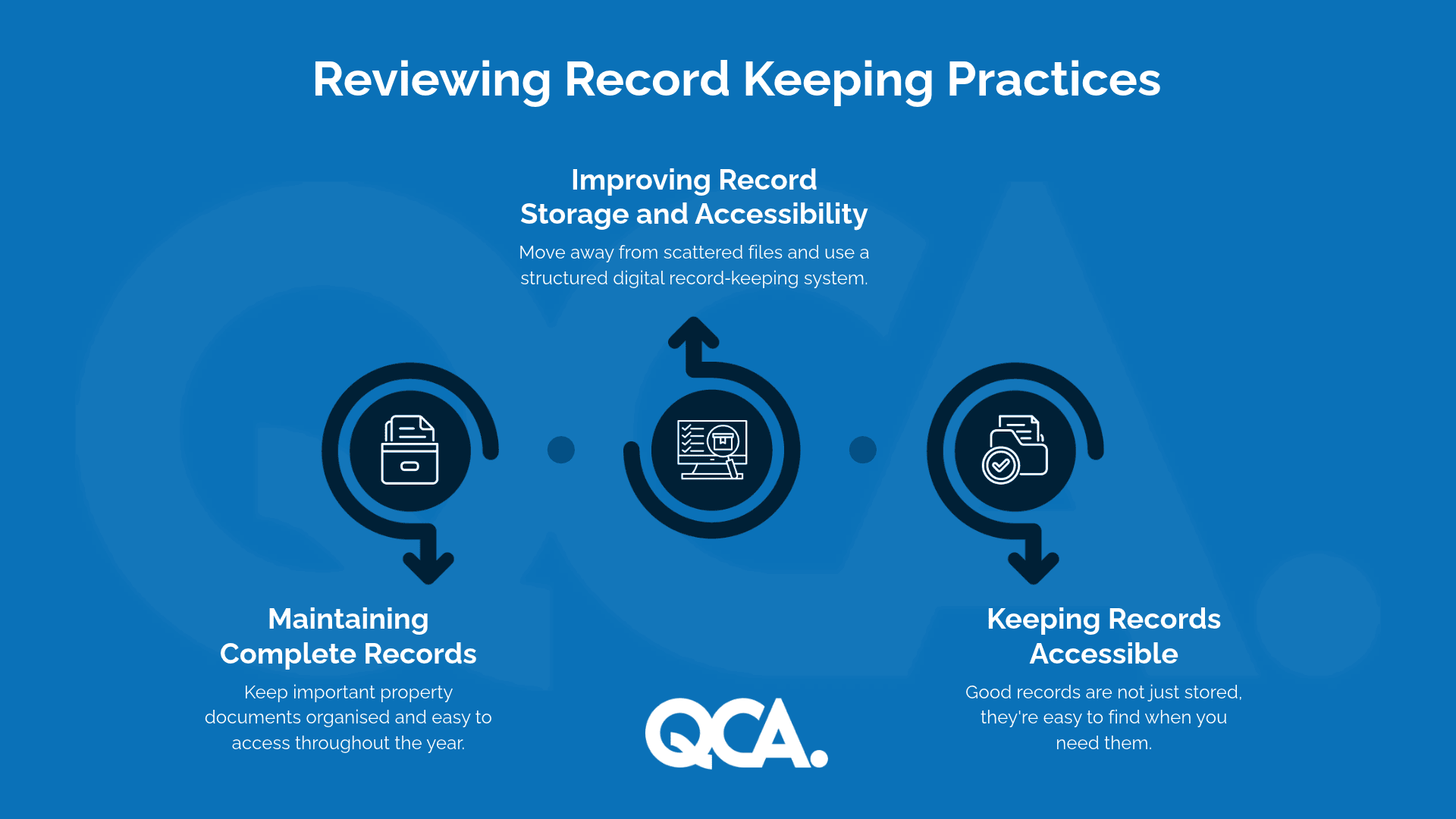
Property investors should be able to easily access purchase documents, loan statements, rental statements, insurance records, maintenance invoices and capital improvement information.
Missing documentation can delay tax preparation and reduce the ability to substantiate claims.
Reviewing records before year-end helps identify gaps while information is still relatively easy to obtain.
Improving Record Storage and Accessibility
Many investors still rely on a mixture of email folders, paper files and scattered digital documents. While this approach can work temporarily, it often becomes difficult to manage as portfolios grow.
Structured digital record-keeping improves accessibility, reduces risk, and simplifies communication with advisors.
Keeping Records Accessible
Good record-keeping isn’t just about storing information. It is about retrieving it when you need it.
An annual review gives you an opportunity to assess whether your documentation is organised to support efficient decision-making and compliance.
Looking Beyond Individual Properties
Many property investors review properties individually without assessing portfolio performance as a whole. This can create blind spots.
One property may perform exceptionally well while another continually underperforms. Without reviewing the portfolio collectively, you may not fully understand these differences.
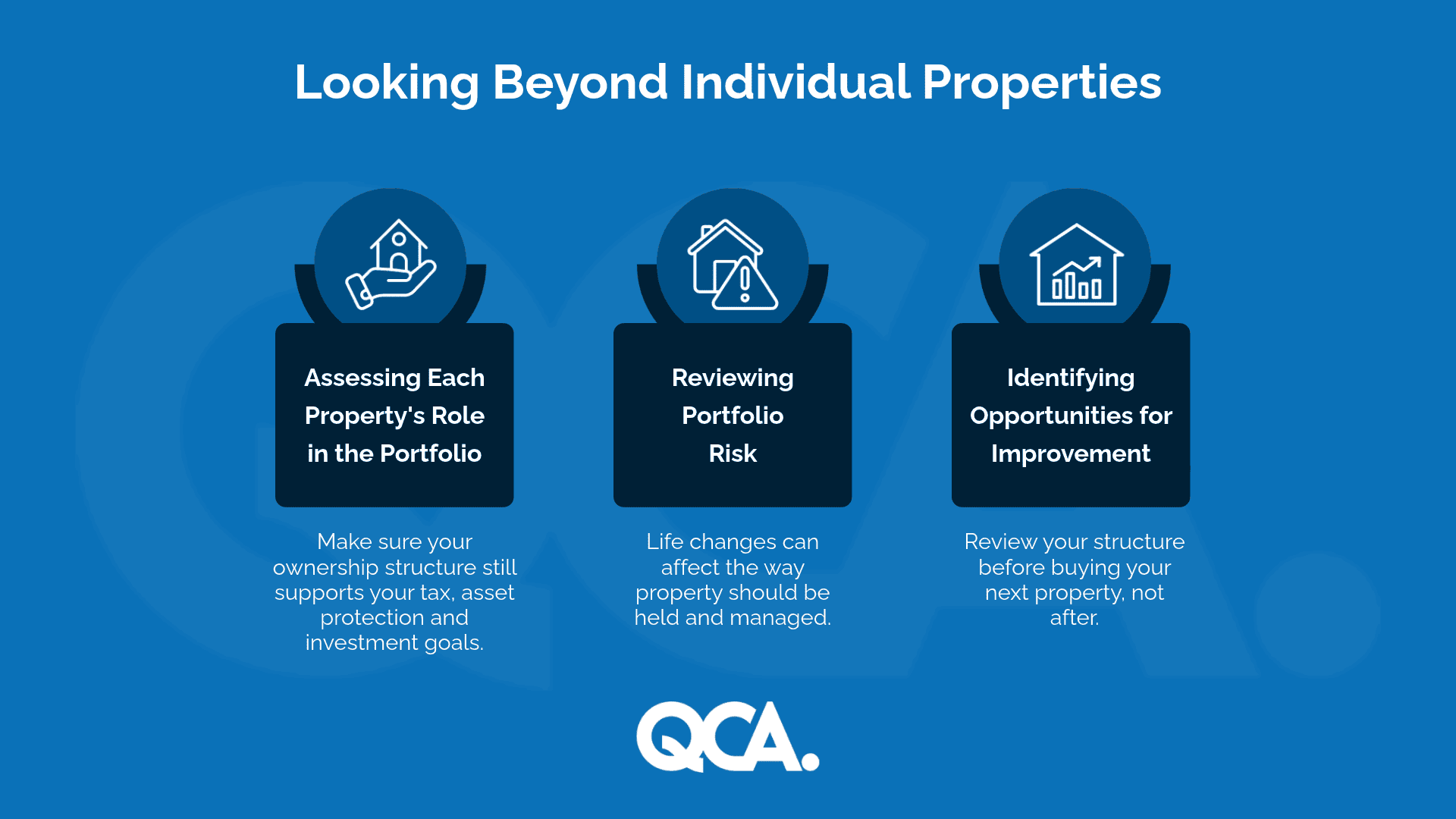
Assessing Each Property’s Role in the Portfolio
Every asset within a portfolio should contribute to a broader objective. Some properties support cashflow. Others focus on growth. Some may provide diversification.
An annual review helps determine whether each property is still supporting its intended purpose.
Reviewing Portfolio Risk
Risk levels often change gradually. Concentration within one location, reliance on a particular tenant profile or exposure to specific market segments can create vulnerabilities.
Reviewing risk before year-end allows investors to adjust strategies while maintaining control over future decisions.
Identifying Opportunities for Improvement
Performance improvements are not always dramatic. Sometimes they involve reviewing expenses, addressing maintenance issues or improving financing arrangements.
Regular reviews help you spot these opportunities before another year passes.
Preparing for Tax Time Before Tax Time Arrives
Many property investors wait to plan their taxes until after the financial year ends. By then, some opportunities may already be gone.
Reviewing your position before the year ends gives you more time to plan and fewer surprises during tax preparation.
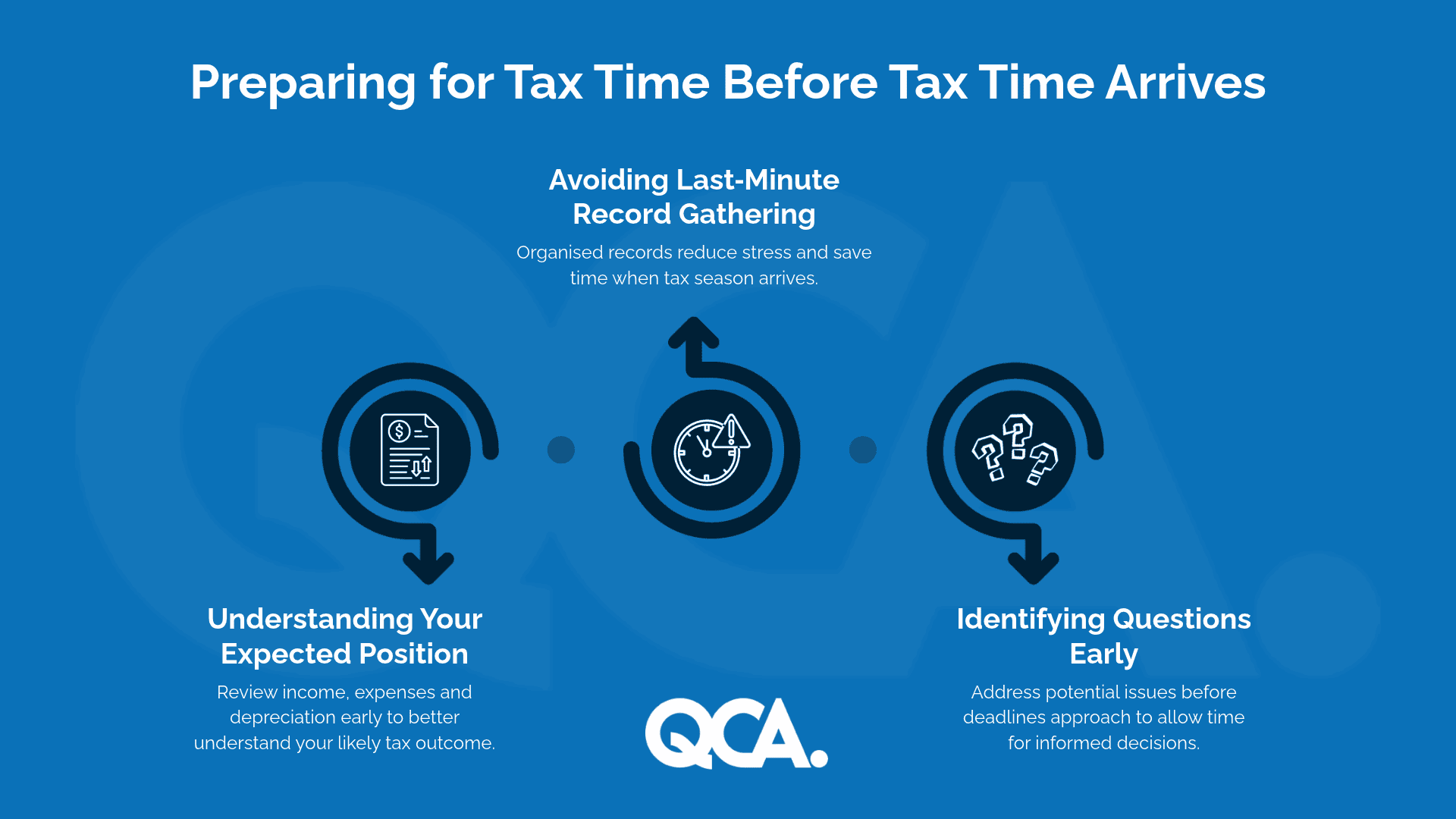
Understanding Your Expected Position
Property income, deductible expenses, and depreciation all affect your overall tax outcome. Reviewing these areas early helps investors understand likely results and decide whether they need any adjustments.
This also assists with budgeting and cashflow planning.
Avoiding Last-Minute Record Gathering
Tax time is much easier when you keep information organised throughout the year. Reviewing records before year-end helps ensure documentation is complete and reduces the administrative burden later.
Identifying Questions Early
An annual review often highlights issues that deserve professional advice. Addressing these questions before deadlines approach creates a more deliberate and informed planning process.
Why Early Conversations Create Better Outcomes
Property investing decisions rarely exist in isolation. Financing, taxation, structures and future acquisitions often influence one another.
The earlier investors review these factors, the more flexibility they have.
Waiting until a loan renewal, property purchase, or tax deadline can limit available options. Starting the conversation earlier gives you more time to model scenarios, review alternatives, and make decisions with confidence.
This matters especially for established investors managing multiple properties or planning future growth.
A Practical Property Review Before Year End
A year-end review does not need to become an extensive project. The goal is simply to confirm that the key parts of your investment strategy are still working together effectively.
An annual review helps confirm that your finances, ownership structure, and record-keeping still support your investment goals. It is also a chance to identify issues early and make informed decisions before the year ahead takes shape.
At QC Accountants, we help Gold Coast property investors review the financial, taxation and structural aspects of their portfolios so they can make informed decisions with confidence. A proactive review often uncovers opportunities, identifies risks and makes planning for the year ahead much easier.
If you would like to discuss your property portfolio before the year ends, book a chat or call (07) 5593 6060.
This is general information only. It is not financial or legal advice. Property, tax and lending rules change regularly, so speak with a qualified professional before acting.