

Australia’s Anti‑Money Laundering and Counter‑Terrorism Financing (AML/CTF) reforms have entered a new phase, and the impact on mid‑sized businesses is significant. From 1 July 2026, AML/CTF Tranche 2 obligations expanded the regulatory net to include accountants, lawyers, real estate agencies, and a wide range of professional service providers. For established Gold Coast businesses, these reforms are not simply administrative adjustments. They reshape how organisations manage client onboarding, record‑keeping, risk assessments and internal controls.
AML/CTF Tranche 2 obligations apply to around 90,000 additional entities across Australia. Many of these businesses have never operated under AML/CTF rules before, so the transition requires planning, system changes, and a clear understanding of what AUSTRAC expects. For businesses in the $3-10 million turnover range, the reforms matter because they introduce new compliance responsibilities at a time when operational complexity is already increasing.
This article explains what AML/CTF Tranche 2 involves, why it matters for established businesses, how election timing could influence future changes, and what Gold Coast businesses should do now to prepare.
Why AML/CTF Tranche 2 Matters for Established Businesses
AML/CTF Tranche 2 obligations are designed to close long‑standing gaps in Australia’s financial crime framework. Professional service providers often act as gatekeepers to financial systems, business structures and property transactions. When these sectors fall outside AML/CTF rules, they create opportunities for misuse.
For growing businesses, the reforms mean that compliance expectations now extend beyond traditional financial institutions. If your business provides services involving client funds, entity formation, property transactions, or advisory work, you may fall within the new requirements. Even if your business isn’t directly covered, your contractors or professional partners may be, which affects how you manage relationships and documentation.
Mid‑sized businesses often operate with more complex structures, multiple service lines and higher transaction volumes. This increases exposure to AML/CTF risks and makes early preparation essential.
What AML/CTF Tranche 2 Requires
The new obligations vary depending on the nature of your services, but most captured businesses will need to implement several core compliance components.
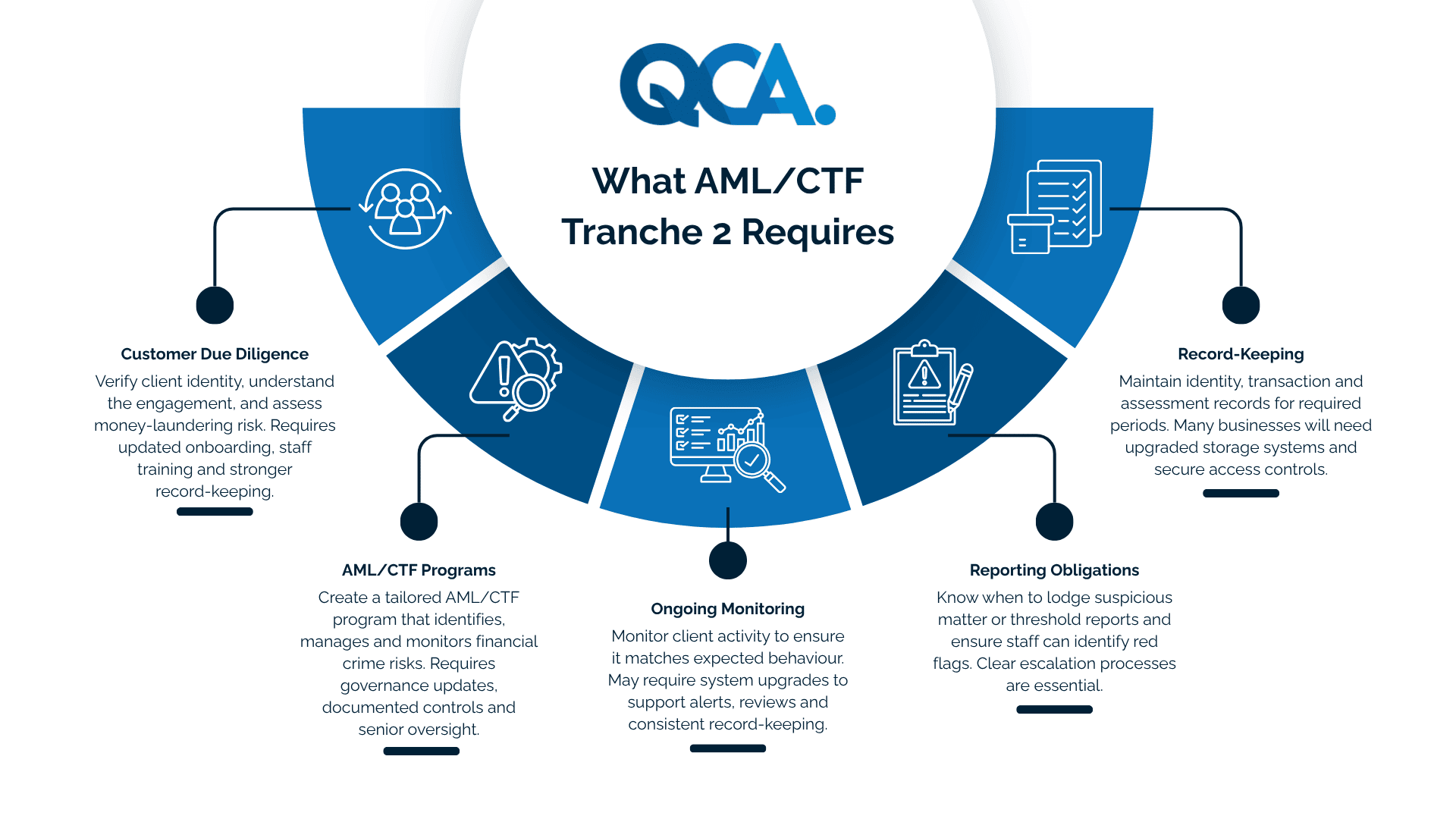
Customer Due Diligence
Customer due diligence (CDD) is one of the most significant changes for businesses newly captured under AML/CTF Tranche 2 obligations. CDD requires businesses to verify client identity, understand the nature of the engagement and assess the risk of money laundering or terrorism financing. This applies to new clients and, in some cases, existing clients when circumstances change.
CDD is not simply about collecting identification documents. Businesses must understand the purpose of the engagement, the source of funds, and whether the client’s behaviour aligns with expected activity. For mid‑sized businesses, this means updating onboarding processes, training staff and ensuring systems can store and retrieve verification records.
AML/CTF Programs
Businesses must develop and maintain an AML/CTF program that outlines how risks are identified, monitored and managed. This includes governance structures, escalation processes and staff training. An AML/CTF program must be tailored to the nature, size and complexity of the business.
For established businesses, this often requires reviewing existing risk frameworks. Many organisations already have governance structures in place, but AML/CTF obligations introduce new risk categories that must be incorporated. This includes assessing exposure to financial crime risks, documenting controls and ensuring senior management oversight.
Ongoing Monitoring
Ongoing monitoring requires businesses to monitor client activity to ensure it aligns with the expected nature of the engagement. Unusual or inconsistent behaviour may require further review. This is particularly relevant for businesses that provide advisory services, property transactions or financial structuring.
For mid‑sized businesses, ongoing monitoring may require system upgrades. CRM systems, workflow tools, and document management platforms may need updates to support monitoring and record‑keeping requirements.
Reporting Obligations
Reporting obligations vary depending on the services provided, but may include suspicious matter reports, threshold transaction reports and other notifications. Businesses must understand when a report is required, how to lodge it and what information must be included.
Reporting obligations introduce new responsibilities for staff. Training is essential to ensure employees can spot red flags and understand when to escalate.
Record‑Keeping
Businesses must retain records for prescribed periods, including identity verification documents, transaction details and internal assessments. Record‑keeping is a core component of AML/CTF compliance and requires secure storage, clear processes and reliable systems.
For established businesses, record‑keeping obligations may require changes to document management systems. Many organisations will need to upgrade storage solutions, implement access controls and ensure records can be retrieved quickly during audits.
How Fixed Election Timing Could Influence the Reforms
The introduction of fixed federal election timing has created discussion about whether AML/CTF Tranche 2 could be adjusted, delayed or expanded depending on the policy priorities of future governments. While the reforms are already in place, election cycles influence regulatory momentum. A future government may refine the scope of Tranche 2, increase reporting requirements or accelerate Tranche 3 reforms.
For established businesses, this means treating AML/CTF compliance as an evolving obligation rather than a one‑off adjustment. Building flexible systems now reduces the cost of future changes. Businesses that invest early in robust compliance frameworks will be better positioned to adapt to future regulatory developments.
What Gold Coast Businesses Should Do Now
Mid‑sized businesses often operate with more complex structures, multiple service lines and higher transaction volumes. This increases exposure to AML/CTF risks and makes early preparation essential.
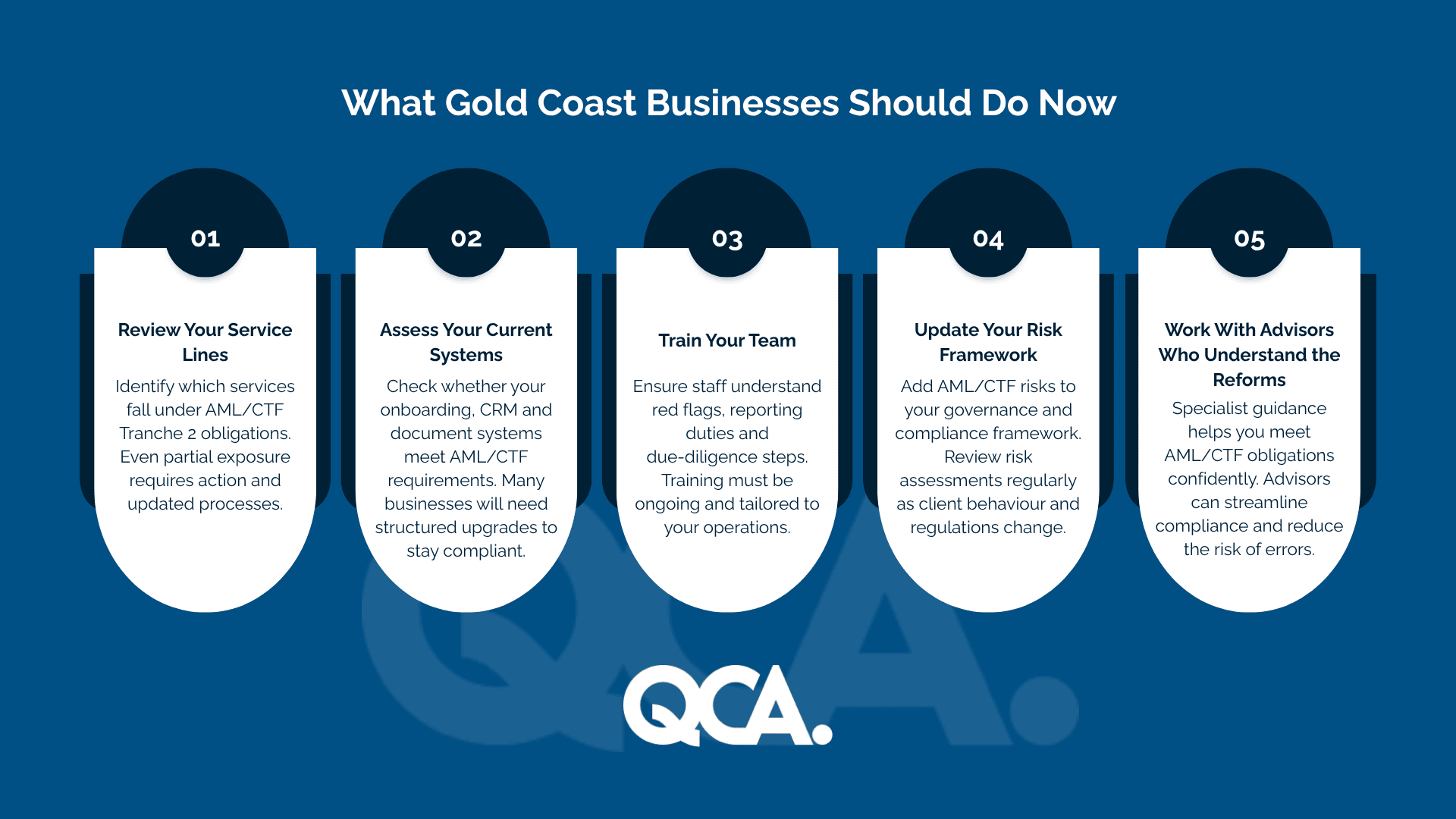
Review Your Service Lines
Determine whether any of your services fall within AML/CTF Tranche 2 obligations. Even partial exposure requires action. Businesses that provide advisory services, property transactions or entity formation may fall within the new requirements.
Assess Your Current Systems
Many businesses will need to upgrade onboarding processes, CRM systems, document storage and reporting tools to meet AUSTRAC requirements. Plan system upgrades carefully to minimise disruption and ensure compliance.
Train Your Team
Staff need to understand red flags, reporting obligations and how to apply due diligence procedures consistently. Training should be ongoing and tailored to the nature of the business.
Update Your Risk Framework
Incorporate AML/CTF risks into your broader governance and compliance framework, especially if your business operates across multiple entities. Update risk assessments regularly to reflect changes in business activity, client behaviour, and regulatory requirements.
Work With Advisors Who Understand the Reforms
AML/CTF compliance is now central to operating a professional services business. Working with advisors who understand the regulatory landscape helps you avoid missteps and implement practical solutions.
Supporting Gold Coast Businesses Through AML/CTF Changes
At QC Accountants, we help established businesses prepare for AML/CTF Tranche 2 obligations. We review your service lines, assess your exposure, update your compliance processes and ensure your systems align with AUSTRAC requirements. For businesses with $3–10 million in turnover, early preparation reduces risk and prevents costly remediation later.
If you need guidance on how AML/CTF Tranche 2 affects your business, book a chat or call us on (07) 5593 6060.
This is general information only. It is not financial or legal advice. AML/CTF rules may change, so check current requirements with AUSTRAC or speak to us before acting.