

The Taxable Payments Annual Report, or TPAR, is one of those obligations that can slip through the cracks when you are busy running your business. It doesn’t arrive with the same fanfare as your BAS or end‑of‑year tax return, yet missing the TPAR deadline can have serious consequences. The Australian Taxation Office uses TPAR data to track contractor payments and ensure that income is being reported correctly. When your report is late, incomplete or inaccurate, it can trigger penalties, audits and unnecessary stress.
For many Gold Coast businesses, the TPAR deadline falls when other compliance tasks are already competing for attention. You might be finalising payroll, preparing your financial statements or managing seasonal workloads. It is easy to assume that a short delay will not matter, but the ATO treats late lodgement seriously. Understanding what the TPAR deadline means, how it fits into your reporting cycle and what happens when you miss it helps you stay compliant and avoid costly mistakes.
What the TPAR Deadline Actually Means
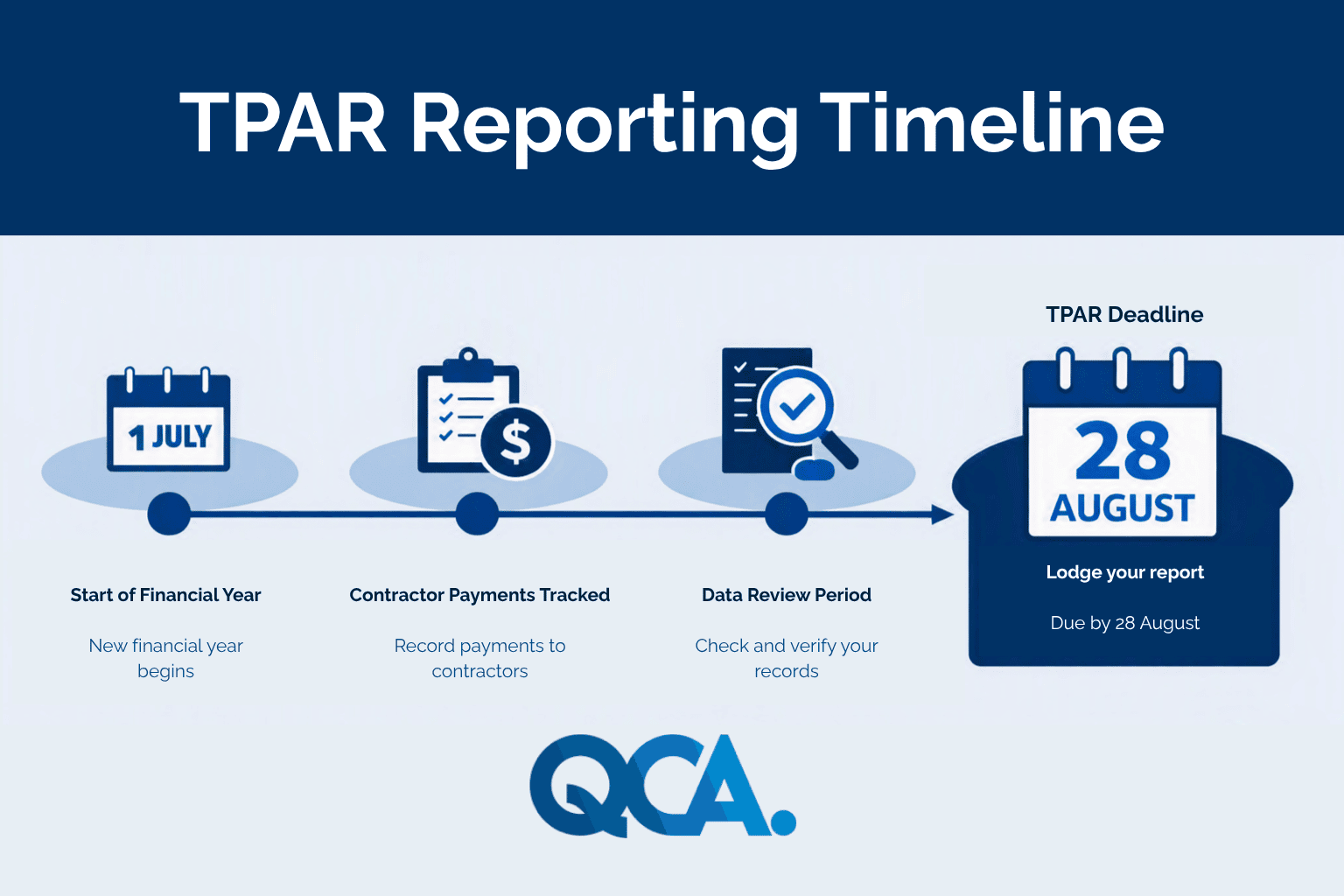
The TPAR deadline is the date by which you must lodge your Taxable Payments Annual Report with the ATO. The report covers payments made to contractors during the financial year for services such as building, cleaning, courier, road freight, IT and security. The deadline is 28 August.
If you lodge electronically, the process is straightforward. You upload your data through the ATO portal or your accounting software. If you lodge manually, you submit a paper form. Either way, the ATO expects your report to be complete and accurate by the TPAR deadline.
The purpose of the TPAR is to give the ATO visibility over contractor income. It helps identify businesses that aren’t reporting correctly and ensures contractors pay the right amount of tax. When your report is late, the ATO loses that visibility, and you become part of their follow‑up process.
Why the TPAR Deadline Matters
The TPAR deadline is not just an administrative date. It is part of the ATO’s compliance framework. The ATO uses TPAR data to cross‑match contractor income with tax returns. When your report is missing or late, it creates a gap in that data. The ATO then needs to investigate whether the missing information is due to oversight or something more serious.
For businesses, missing the TPAR deadline can lead to penalties and increased scrutiny. The ATO may issue fines for late lodgement, request additional information or initiate an audit. Even when the delay is unintentional, the process can be time‑consuming and stressful.
Staying ahead of the TPAR deadline shows that your business takes compliance seriously. It also protects your reputation with contractors, clients and regulators.
What Happens When You Miss the TPAR Deadline
Missing the TPAR deadline can trigger several consequences. The ATO may issue a failure‑to‑lodge penalty, which increases the longer your report remains outstanding. They may also contact you directly to request lodgement or clarification. In some cases, they may review your contractor payments in detail to ensure you’ve reported all income correctly.
Penalties for Late Lodgement
The ATO calculates penalties based on your business size and the length of the delay. For small businesses, the penalty can start at a few hundred dollars and increase monthly until you lodge the report. For larger businesses, the penalty can be significantly higher.
The ATO also considers your compliance history. If you have missed deadlines before, the penalty may be more severe. If this is your first delay and you lodge promptly after being reminded, the ATO may reduce or waive the penalty.
Even when the financial penalty is modest, the administrative burden can be heavy. You may need to provide explanations, respond to ATO correspondence and review your contractor records to confirm accuracy.
Increased Audit Risk
When you miss the TPAR deadline, the ATO may flag your business for review. The ATO uses data analytics to identify patterns of non‑compliance. Late or missing reports can trigger a closer look at your contractor payments, GST reporting and income declarations.
An audit is not always punitive, but it is disruptive. It requires time, documentation and communication with the ATO. Lodging your TPAR on time reduces the likelihood of being selected for review.
Reputational Impact
Contractors rely on your TPAR data to confirm that their income has been reported correctly. When your report is late, it can create confusion or concern among your contractors. It may also affect your standing with industry bodies or clients who expect strong compliance practices.
Timely lodgement reinforces your professionalism. It shows that you manage your obligations carefully and respect the systems that support fair taxation.
How to Avoid Missing the TPAR Deadline
Avoiding missing the TPAR deadline is about preparation and process. You need to know which payments are reportable, how to capture them accurately and when to lodge. A clear system helps you stay compliant even when business is busy.
Identify Reportable Payments Early
The first step is to identify which payments need to be included in your TPAR. The ATO requires reporting for contractors who provide services in specific industries such as building, cleaning, courier, road freight, IT and security. If your business operates in one of these sectors, you need to track contractor payments throughout the year.
You also need to confirm whether your contractors are individuals, companies or trusts. The reporting requirements apply to all structures, but the details you provide may differ. Identifying reportable payments early helps you capture the right data from the start.
Keep Accurate Records
Accurate records are essential for meeting the TPAR deadline. You need to record contractor names, ABNs, addresses and payment amounts. You also need to ensure that your accounting software is configured to track these details.
Once your records are complete, lodging your TPAR becomes simple. You can generate the report directly from your software and submit it electronically. When your records are incomplete, you may need to chase missing information, which delays lodgement.
Review Your Data Before Lodging
Before you lodge your TPAR, review your data carefully. Check that all contractor details are correct and that payment amounts match your records. The ATO cross‑matches this data with contractor tax returns, so accuracy matters.
A quick review before lodgement helps you avoid errors that could trigger follow‑up questions or amendments later. It also ensures that your report is complete and compliant.
Plan Ahead for the Deadline
The TPAR deadline falls on 28 August each year. Mark it in your calendar and set reminders well in advance. If you use accounting software, enable automatic alerts. If you work with an accountant, confirm that they have your data early.
Planning ahead helps you avoid last‑minute stress. It also gives you time to resolve any issues before the deadline.
Why Gold Coast Businesses Are at Risk of Missing the TPAR Deadline
Gold Coast businesses often operate in industries that rely heavily on contractors. Construction, cleaning, hospitality and transport are all sectors where TPAR reporting applies. These industries also experience seasonal fluctuations, which can make record‑keeping challenging.
When workloads increase, administrative tasks often take a back seat. The TPAR deadline arrives while you are focused on operations, and it is easy to overlook.
Common Reasons for Missing the Deadline
Many businesses miss the TPAR deadline because they underestimate how long it takes to prepare the report. They assume that contractor data is complete, only to discover missing ABNs or incorrect payment details. Others rely on manual systems that slow data collection.
Some businesses simply forget. The TPAR deadline does not receive the same attention as BAS or tax return lodgement, so it slips through unnoticed.
Understanding these risks helps you put safeguards in place. Automated reminders, accurate record‑keeping and early preparation all reduce the chance of missing the deadline.
The Cost of Non‑Compliance
The financial cost of missing the TPAR deadline can be significant, but the indirect costs are often higher. Time spent dealing with ATO correspondence, reviewing records and managing penalties takes you away from your core business.
Non‑compliance can also affect your relationship with contractors. When your report is late, contractors may question whether you reported their income correctly. This can create tension and damage trust.
Compliance is not just about avoiding penalties. It is about maintaining confidence in your business operations.
How QC Accountants Helps You Stay Ahead of the TPAR Deadline
At QC Accountants, we help Gold Coast businesses manage their compliance obligations with confidence. We understand that the TPAR deadline can be easy to miss, especially when you are focused on day‑to‑day operations. Our team monitors your reporting requirements, prepares your data and lodges your TPAR on time.
We also review your contractor arrangements to ensure that payments are classified correctly. This helps you avoid errors and ensures that your report aligns with ATO expectations.
When you work with QC Accountants, you gain peace of mind. You know that your TPAR is accurate, complete and lodged before the deadline. You also know that your business is protected from unnecessary penalties and audits.
Local Expertise That Makes Compliance Easier
Our team understands the unique challenges Gold Coast businesses face. We work with clients across construction, cleaning, hospitality and professional services. We know how contractor arrangements vary and how to tailor your reporting process to suit your operations.
At QC Accountants, we help Gold Coast businesses and investors stay on top of changes like this. If any of this applies to you, book a chat or call (07) 5593 6060.
This is general information only, not financial or legal advice. Rules and thresholds change, so check current requirements with the ATO or speak to us before acting.