

Payroll tax is one of those obligations that sneaks up on growing businesses. You start with a small team, you add a few more people, and before long your wages bill is larger than you realise. The Queensland payroll tax threshold is designed to give smaller employers breathing room, but once your wages pass that point, payroll tax becomes part of your regular compliance workload. Many Gold Coast businesses cross the payroll tax threshold without noticing, which creates stress later when the Queensland Revenue Office reviews their figures. Understanding how the threshold works and how to monitor your position helps you stay ahead of the issue rather than reacting to it.
The payroll tax threshold is not complicated, but it does require attention. You need to know what counts as taxable wages, how grouping rules work, and how monthly wages interact with the annual threshold. You also need a clear process for checking your position throughout the year. When you understand these moving parts, you can tell early whether your business is approaching the payroll tax threshold and whether you need to register.
What the Payroll Tax Threshold Actually Means
The payroll tax threshold is the point at which your total taxable wages exceed the amount the Queensland Government allows before payroll tax applies. Queensland’s threshold is higher than in some other states, giving Gold Coast businesses a little more room to grow before payroll tax becomes payable. Even so, many employers cross the threshold earlier than expected because they underestimate what counts as wages.
What Counts as Taxable Wages
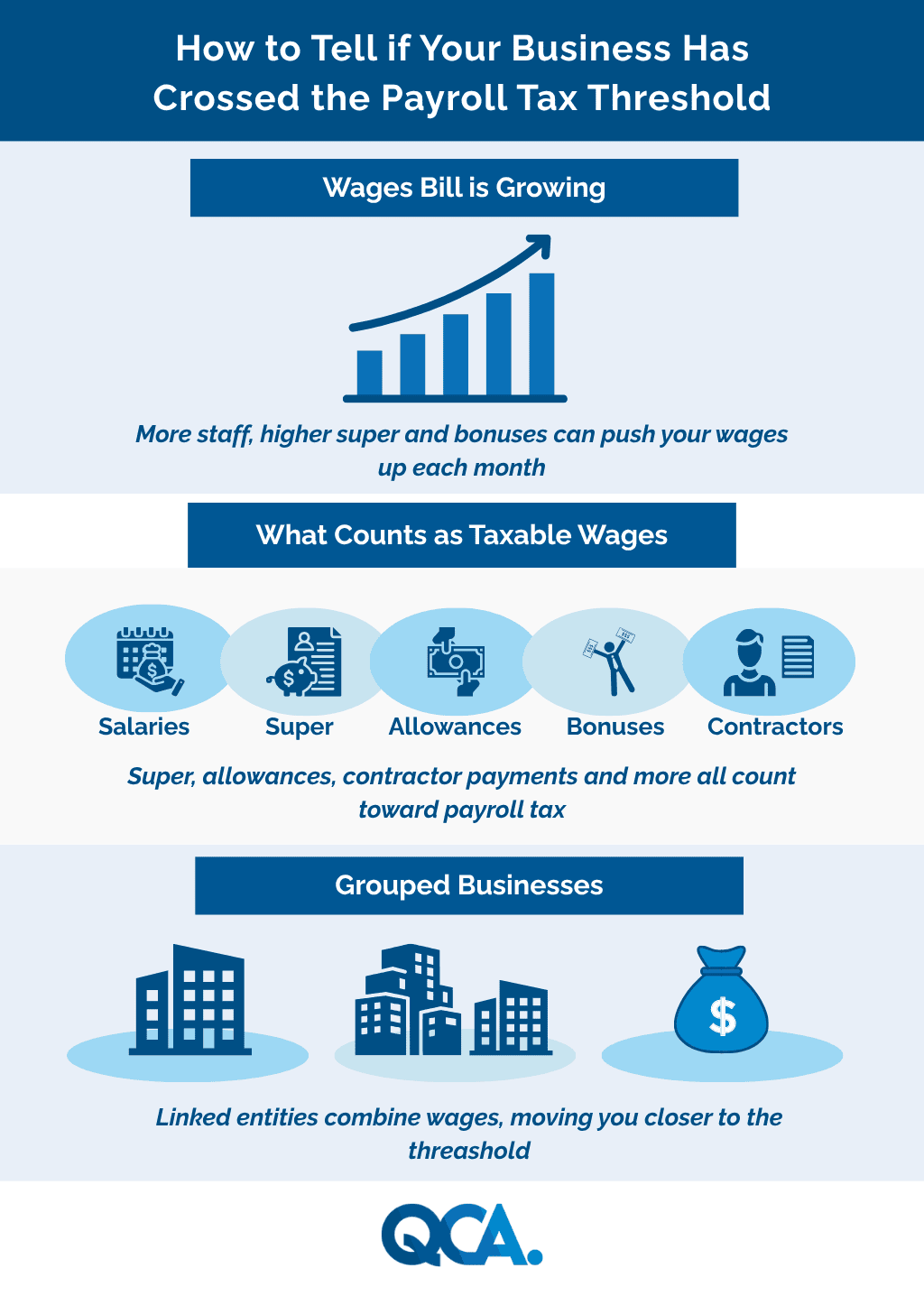
Taxable wages include more than just the weekly or fortnightly pay you give your employees. They include superannuation, allowances, bonuses, commissions, contractor payments that fall within payroll tax rules, and certain fringe benefits. When you add these items together, your wages bill is often larger than you expect.
Many Gold Coast businesses get confused about how to treat contractors. Contractor payments can be taxable wages when the contractor is providing labour rather than selling a finished product. The Queensland Revenue Office looks at the substance of the arrangement, not the label. If the contractor works under your direction, uses your equipment, performs ongoing work, or is effectively part of your workforce, their payments may be included in taxable wages. Even contractors who operate through a company or trust can fall within payroll tax rules when the arrangement is primarily for labour.
Some contractor payments are exempt, but the exemptions are specific. Short‑term engagements, services provided for less than 90 days in a financial year, or situations where the contractor supplies materials and tools may fall outside payroll tax. The rules are detailed, and many businesses assume contractors are automatically exempt. When they include superannuation and other payments, and then add contractor payments that fall within payroll tax rules, they realise they are much closer to the payroll tax threshold than they thought.
Why the Threshold Is Easy to Cross
The payroll tax threshold is based on annual wages, but the Queensland Revenue Office also monitors monthly wages. A business can cross the threshold gradually without noticing. You might hire one extra person, then another, then increase hours for an existing employee. You might pay a bonus at the end of the year or bring in contractors during busy periods. Each change adds to your wages bill.
Contractor payments are often the tipping point. Businesses bring in contractors for seasonal work, project work or specialised tasks. When those contractors fall within payroll tax rules, their payments increase your taxable wages. Many Gold Coast businesses cross the payroll tax threshold because they do not realise their contractor arrangements are captured.
How to Tell When You Are Approaching the Payroll Tax Threshold
The best way to tell whether you are approaching the payroll tax threshold is to monitor your wages bill regularly. You need a clear picture of your total taxable wages, not just your payroll figures. You also need to understand how grouping rules work because they can affect your threshold position.
Monitoring Your Wages Bill Throughout the Year
Your payroll software gives you a running total of wages, but it does not always show the full picture. You need to include superannuation, allowances, bonuses, commissions and contractor payments that fall within payroll tax rules. You also need to include fringe benefits. When you add these items together, you get your true wages bill. Monitoring this figure monthly helps you see whether you are approaching the payroll tax threshold.
The contractor component is often the most misunderstood. Review contractor arrangements regularly to determine whether they fall within payroll tax rules. If the contractor works in a way that resembles an employee relationship, or if the contract is primarily for labour, you may need to include their payments. Regular review helps you avoid surprises.
Understanding Grouping Rules
Grouping rules apply when multiple entities are connected through common ownership or control. Many Gold Coast business owners operate more than one entity. You might have a trading company, a trust, a holding company or a second business. When entities are grouped, their wages are combined for payroll tax purposes. This means you may cross the payroll tax threshold even when each entity is below it individually. Understanding grouping rules helps you avoid surprises.
Watching for Seasonal or Irregular Payments
Some businesses have seasonal wage spikes. Hospitality, tourism, construction and retail often increase staff during busy periods. These spikes can push your wages above the payroll tax threshold even when your usual wages are lower. Irregular payments such as bonuses or contractor invoices can also affect your position. When you understand how these payments interact with the threshold, you can plan ahead.
What Happens When You Cross the Payroll Tax Threshold
Crossing the payroll tax threshold means you need to register for payroll tax and start lodging returns. The Queensland Revenue Office expects you to register once your wages exceed the threshold. When you cross the threshold without realising it, you may need to lodge retrospective returns. This can create stress because you need to calculate payroll tax for past periods and pay any outstanding amounts.
Registering for Payroll Tax
Registering for payroll tax is straightforward. You provide your business details, wage information, and grouping information. Once you are registered, you lodge monthly or annual returns depending on your wages bill. Lodging returns regularly helps you stay compliant and avoid penalties.
Lodging Retrospective Returns
When you cross the payroll tax threshold without noticing, you may need to lodge retrospective returns. This means calculating payroll tax for past periods and paying any outstanding amounts. The Queensland Revenue Office may apply interest or penalties for late returns. Understanding your position early helps you avoid retrospective lodgements.
Managing Payroll Tax Going Forward
Once you are registered, payroll tax becomes part of your regular compliance workload. You need to monitor your wages bill, lodge returns and pay payroll tax on time. You also need to understand how changes in your business affect your payroll tax position. Hiring new staff, increasing hours, paying bonuses or bringing in contractors can all affect your wages bill. When you understand these changes, you can manage payroll tax confidently.
How to Stay Ahead of the Payroll Tax Threshold
Staying ahead of the payroll tax threshold requires a clear process. You need to monitor your wages bill, understand grouping rules and plan for seasonal or irregular payments. You also need to review your position regularly. With a clear process, you can tell early whether you are approaching the payroll tax threshold and whether you need to register.
A Practical Way to Check Your Position
You can check your position by reviewing your wages bill monthly. This means reviewing your payroll figures, superannuation, allowances, bonuses, commissions, contractor payments, and fringe benefits. You also need to consider grouping rules. Reviewing these items regularly gives you a clear picture of your wages bill and your threshold position.
Planning for Growth
As your business grows, your wages bill grows too. Hiring new staff, increasing hours or expanding operations can push you above the payroll tax threshold. Planning for growth helps you manage payroll tax. You can review your wages bill before hiring, consider how changes affect your threshold position and plan your compliance workload.
Working With a Local Accountant
A local accountant helps you understand your payroll tax position. At QC Accountants, we monitor your wages bill, explain grouping rules and help you plan for growth. We also help you register for payroll tax when needed and lodge returns accurately. Working with a local accountant gives you confidence because you know your payroll tax position is being monitored.
Why Gold Coast Businesses Often Miss the Payroll Tax Threshold
Gold Coast businesses often miss the payroll tax threshold because they underestimate their wages bill. They look at base wages and assume they are below the threshold. When they include superannuation, allowances, bonuses, commissions, contractor payments and fringe benefits, they realise they are closer to the threshold than they thought. Seasonal wage spikes also affect Gold Coast businesses. Tourism, hospitality and construction often increase staff during busy periods. These spikes can push wages above the threshold.
The Role of Contractors
Contractor payments often fall within payroll tax rules. Many Gold Coast businesses use contractors during busy periods. When contractor payments are included in taxable wages, the wages bill increases. Understanding how contractor payments interact with payroll tax helps you avoid surprises.
A contractor may be included when they work under your direction, perform ongoing work, or provide labour rather than a finished product. Even contractors who operate through a company or trust can be captured when the arrangement is primarily for labour. Some contractors are exempt, but the exemptions depend on the nature and length of the engagement. Reviewing contractor arrangements throughout the year helps you understand your true wages bill and your threshold position.
The Impact of Multiple Entities
Many Gold Coast business owners operate more than one entity. Grouping rules combine wages across entities. This means you may cross the payroll tax threshold even when each entity is below it individually. Understanding grouping rules helps you manage your payroll tax position.
Staying Compliant Without Stress
Payroll tax does not need to be stressful. When you understand the payroll tax threshold and how to monitor your position, you can stay compliant without surprises. You can plan for growth, manage your wages bill, and lodge returns confidently. You can also work with a local accountant who understands Gold Coast businesses and helps you stay ahead of your obligations.
At QC Accountants, we help Gold Coast businesses stay on top of payroll tax. If any of this applies to you, book a chat or call (07) 5593 6060.
This is general information only. This is not financial or legal advice. Rules and thresholds change, so check current requirements with the Queensland Revenue Office or speak to us before acting.